
Wasp and Hornet Removal in the USA
Our technicians approach Wasp and Hornet Removal by first locating the nest during daylight when activity is highest. Paper wasps build open combs under eaves while yellowjackets and hornets prefer enclosed cavities or underground burrows. We measure nest diameter and count active foragers to determine colony size before any product is applied.
Spartan Pest Solutions uses residual dusts inside nest entrances and quick-knockdown aerosols on exposed combs. After treatment the structure is monitored for returning workers and any secondary entrances are sealed with foam or caulk rated for exterior use. Spartan Pest Solutions applies baits in voids where wasp and hornet removal forages near foundations throughout the USA.
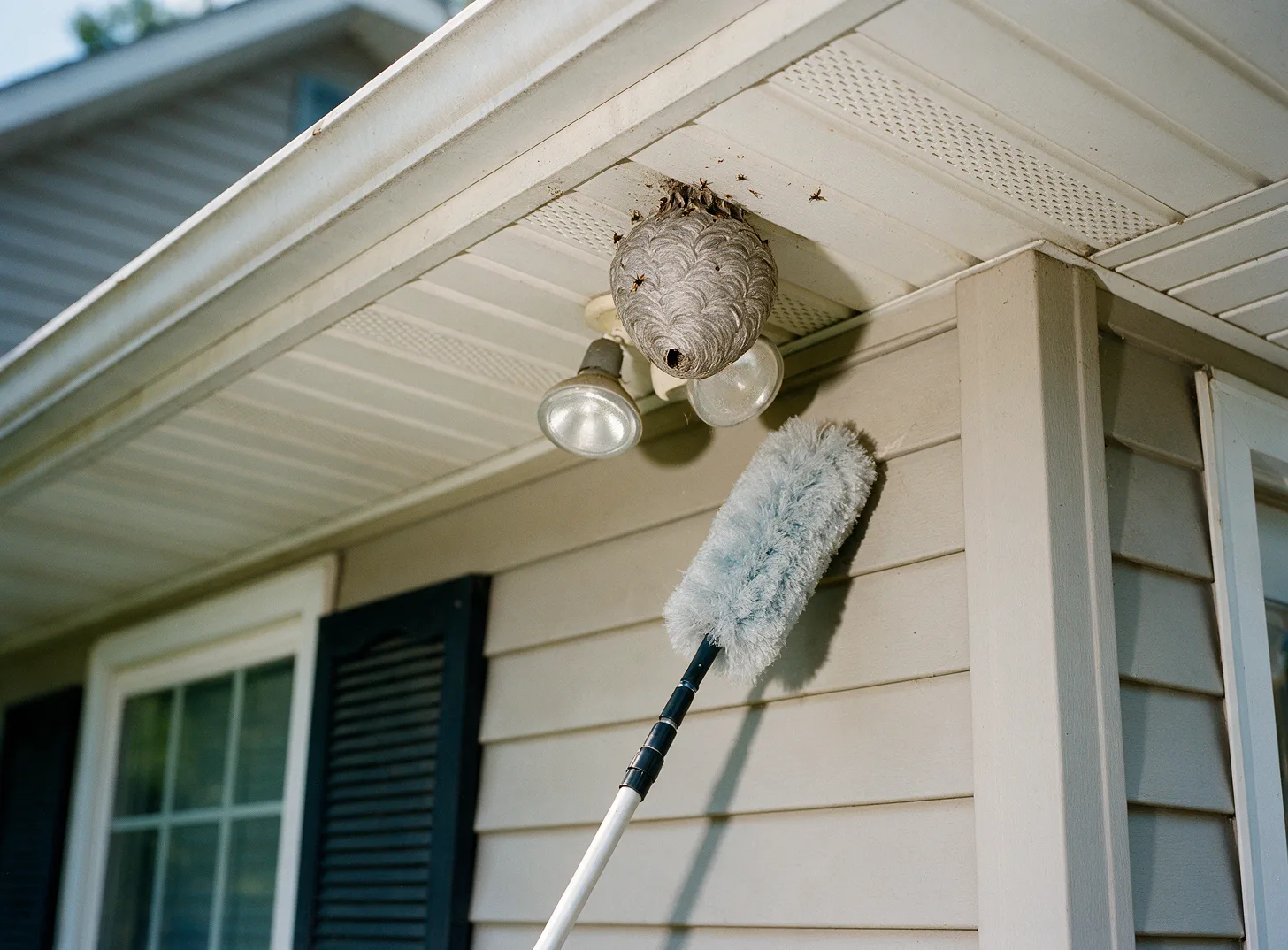
Warning Signs of Wasp or Hornet Activity
- Visible paper nest attached to eaves or soffits
- Sudden increase in wasps near trash or fruit trees
- Buzzing sound from wall voids or attic spaces
- Ground holes with constant insect traffic nearby
- Aggressive defense of one area when approached
Inspection Steps Our Technicians Follow
Technicians start at the roofline and work downward checking soffits, fascia boards and light fixtures for open combs. They use a telescoping mirror and flashlight to view inside cavities without disturbing the nest. Ground nests are located by observing flight lines at dawn and dusk when wasps return with food.
Nest size and species are recorded on site. Yellowjackets leave small soil mounds at entry holes while bald-faced hornets create large gray paper envelopes in trees. These details dictate whether dust or liquid treatment will reach the queen and brood.
Entry points around windows and utility penetrations are measured so the correct diameter of expanding foam can be selected for sealing after the colony is eliminated.
Treatment Materials and Application
We apply a pyrethroid dust directly into nest entrances using a hand duster with extension tubes. The dust clings to returning workers and is carried back to the queen. Exposed combs receive a contact aerosol that penetrates the paper cells and kills larvae within minutes.
No residual liquids are broadcast on foliage. Instead our technicians limit product to the nest structure and immediate flight path. This reduces drift and leaves only the treated cavity as the treated zone.
Nests inside wall voids receive a follow-up dust application through the original entry hole after the colony has died. The void is then plugged to stop future queens from reusing the same cavity the next season.
Homeowner Preparation Before Arrival
Keep all windows and doors closed on the side of the house where the nest is located. Remove pets from the yard and cover outdoor furniture if it sits directly under the nest. Note the exact location and any secondary holes you have seen so the technician can plan the safest route to the nest.
Do not attempt to spray the nest yourself with over-the-counter aerosols. Disturbed wasps can travel fifty feet or more and multiple stings increase the chance of an allergic reaction even in people without prior history.
Turn off any irrigation that waters the area around a ground nest. Wet soil can cause dust treatments to clump and reduce contact with the insects inside the burrow.
Follow-Up Sealing and Monitoring
After the colony is confirmed dead the original entry points are sealed with exterior-grade silicone or expanding foam. This prevents overwintering queens from re-entering the same void next spring. Any damaged siding or trim is left for the homeowner to repair after our visit.
Spartan Pest Solutions returns once more to check for new nest starts in the same season. Small paper starts are removed by hand before workers emerge. No additional product is applied during this visit unless fresh activity is found.
Homeowners are advised to keep trash lids tight and remove fallen fruit promptly. These steps reduce the number of foraging wasps that may locate a new nesting site on the property later in the year.
Wasp and Hornet Removal questions
How do you know if the nest is empty after treatment?
Technicians return the following day at peak activity hours and observe the nest for any movement. Absence of returning workers combined with no fresh fecal spots on the comb confirms the colony is gone. Ground nests are checked by placing a small stone over the hole and watching for displacement.
Can I remove the nest myself after the wasps are gone?
Once the colony has died the comb can be cut down with a pole saw or scraper. Wear gloves because old stingers remain sharp. Place the comb in a sealed bag before disposal to avoid attracting ants or other scavengers to the protein-rich larvae left inside the cells.
What if wasps keep returning to the same spot?
Returning foragers are usually from a new queen scouting the old site. We re-inspect for hidden secondary entrances and apply a small amount of dust inside any new hole. Persistent activity after two visits usually means a second nest exists nearby that was missed on the first inspection.
Are ground nests harder to treat than aerial ones?
Ground nests require the technician to approach from downwind and apply dust directly into the entrance without blocking airflow. If the burrow has multiple exits the dust is puffed into each one until no more wasps emerge. These nests often need a follow-up visit because the queen may be deeper in the soil.
Schedule Wasp and Hornet Removal
Contact Spartan Pest Solutions to arrange inspection of active nests on your property.