
Termite Control in the USA
Termites enter buildings where untreated wood meets soil or where moisture collects near foundations. Subterranean species build shelter tubes along concrete and consume cellulose from the inside out, weakening joists and sill plates before visible damage appears. Spartan Pest Solutions technicians map these entry routes during every visit and focus treatment on the active galleries rather than broadcast spraying open areas.
Homeowners can reduce attractants by clearing wood debris from the perimeter, fixing exterior leaks that keep soil damp, and storing firewood off the ground away from siding. These steps limit new colony starts while our technicians install monitoring stations and apply registered termiticides to the soil perimeter and any voids under slabs. Our technicians locate nests before treating termite control with Spartan Pest Solutions methods used across the USA.
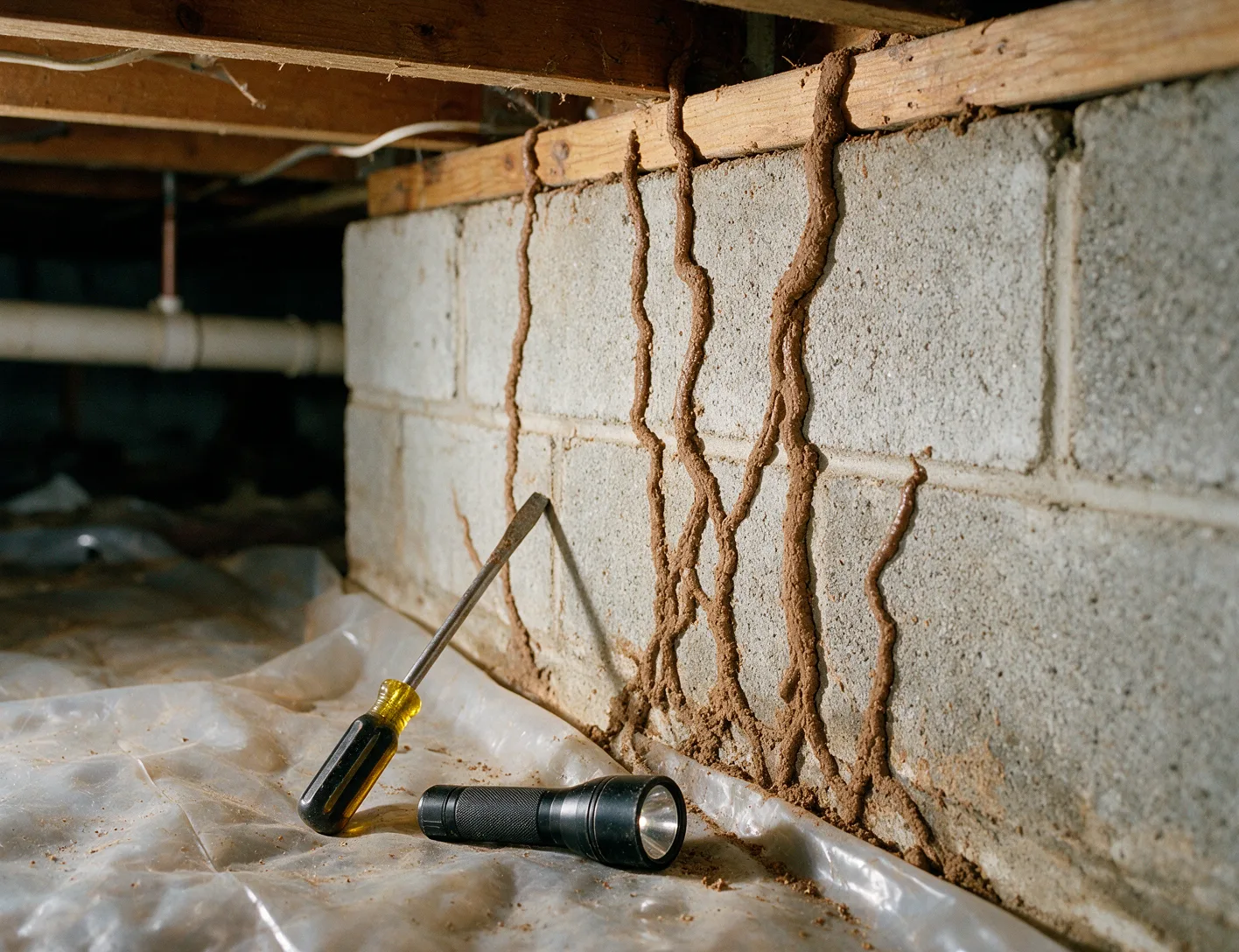
Visible Indicators of Active Termites
- Mud tubes running along foundation walls or piers
- Discarded wings near windows after spring flights
- Hollow sounding wood when tapped with a screwdriver
- Frass pellets accumulating below exit holes in drywood galleries
- Sagging floors or buckling drywall from hidden structural loss
Inspection Points Technicians Check
Our technicians start at the exterior grade line and probe every wood-to-soil contact point with an awl. They record moisture readings above 20 percent in sill plates and joists, then follow any shelter tubes upward into wall cavities. Inside crawl spaces they check for cellulose debris on the soil and note any utility penetrations that bypass the foundation.
Attic inspections focus on rafters and sheathing where drywood termites may leave fecal pellets. Technicians also lift insulation batts to inspect rim joists and examine expansion joints in concrete slabs for mud residue. Each finding is logged on a diagram so treatment can target only the confirmed galleries.
Treatment Application Methods
Liquid termiticide is injected under pressure through drilled holes in the slab or along the foundation trench to create a continuous treated zone. Bait stations are placed in the soil at intervals around the structure and checked on follow-up visits for consumption. Wood members showing internal damage receive direct injection or replacement of the affected sections only.
Technicians avoid treating clean, dry wood that shows no activity. They seal utility entry points with expanding foam after treatment to block re-entry routes. All products are applied according to label rates for the specific termite species identified on site.
Monitoring and Follow-Up Work
After the initial application, Spartan Pest Solutions installs in-ground stations along the treated perimeter. Each station contains a monitoring matrix that technicians inspect every three to four months for signs of feeding. When activity is recorded, the station receives a bait matrix until feeding stops.
Above-ground monitors are placed over any remaining mud tubes or damaged wood so continued activity can be tracked without repeated drilling. Homeowners receive a simple map showing station locations and are asked to avoid disturbing the soil around them during landscaping.
Homeowner Preparation Before Arrival
Clear at least three feet of vegetation and mulch away from the foundation so technicians can access the soil line. Move outdoor furniture and stored items away from exterior walls. Inside, remove stored boxes from crawl space entries and attic hatches.
Note any rooms where floors feel springy or where small piles of sawdust-like material appear. Provide access to utility rooms and water heater closets where pipes enter the structure. These steps allow our technicians to complete the inspection and first treatment pass in one visit.
Termite Control questions
How do termites reach upper floors?
Subterranean termites build protective mud tubes along foundation walls and plumbing lines to reach higher wood members. Once tubes connect to a moisture source, workers travel upward and excavate galleries inside joists and studs while leaving a thin outer shell intact.
What should be done with firewood stacks?
Move firewood at least twenty feet from the house and keep it elevated on a metal rack. Bark and small pieces on the ground create cellulose food sources that draw foraging termites closer to the foundation where they can locate entry points.
Can termites cross treated soil?
A properly applied termiticide creates a repellent or lethal barrier that foraging workers avoid or die in before reaching the structure. Stations placed in the same soil allow monitoring so any breach is detected before new damage occurs.
Why replace only damaged wood sections?
Only members showing active galleries or structural loss are cut out and replaced. Surrounding wood that tests sound receives a direct treatment to kill any remaining termites inside without unnecessary demolition of the framing.
Schedule Termite Control
Contact Spartan Pest Solutions to have our technicians inspect soil contact points and install monitoring stations around the structure.